Form is not the first thing most returning runners think about. Getting out the door is the first thing. Covering the distance without something complaining is the second.
But form does matter on a comeback, and not in the way the coaching world sometimes makes it sound.
The goal is not a technical overhaul. It is removing a few habits that create unnecessary wear, so the comeback holds past the first month.
Posture: the one thing that touches everything else
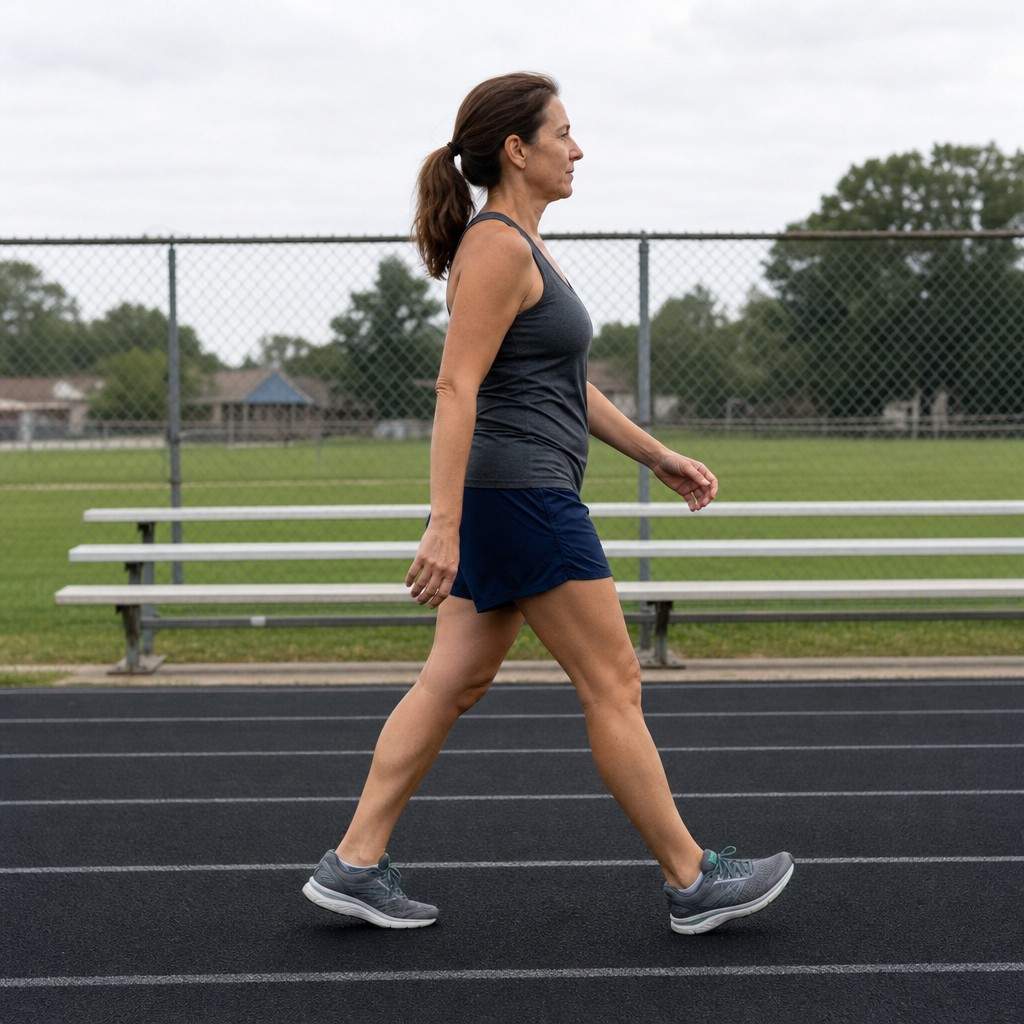
Good running posture is simple to describe and easy to let drift.
Stand tall. Head up. Eyes roughly 20 feet ahead rather than at your shoes. Shoulders relaxed and low, not riding up near your ears.
That last one is worth pausing on. When a run gets hard, the shoulders tend to creep upward. It burns energy and tightens the neck and upper back. A quick drop of the shoulders takes no fitness at all.
Tension there signals tension everywhere.
The hips follow the shoulders. If the upper body is scrunched and forward, the hips tend to drop behind the stride rather than driving through it. Keeping tall through the torso naturally puts the hips in a better position.
Arms: easy does it
Your arm swing balances your stride. Keep your elbows at roughly 90 degrees and let them swing forward and back, not across your chest.
A relaxed hand helps. Imagine holding a potato chip without crushing it. If your hands are white-knuckled, your shoulders are too.
Arms that swing across the body waste energy. They also add rotation you then have to resist. Keep the swing compact and in line, and the legs can do their work without fighting a swinging upper half.
Relaxed arms are often the fastest fix for a run that feels like hard work.
Cadence: shorter strides, less pounding
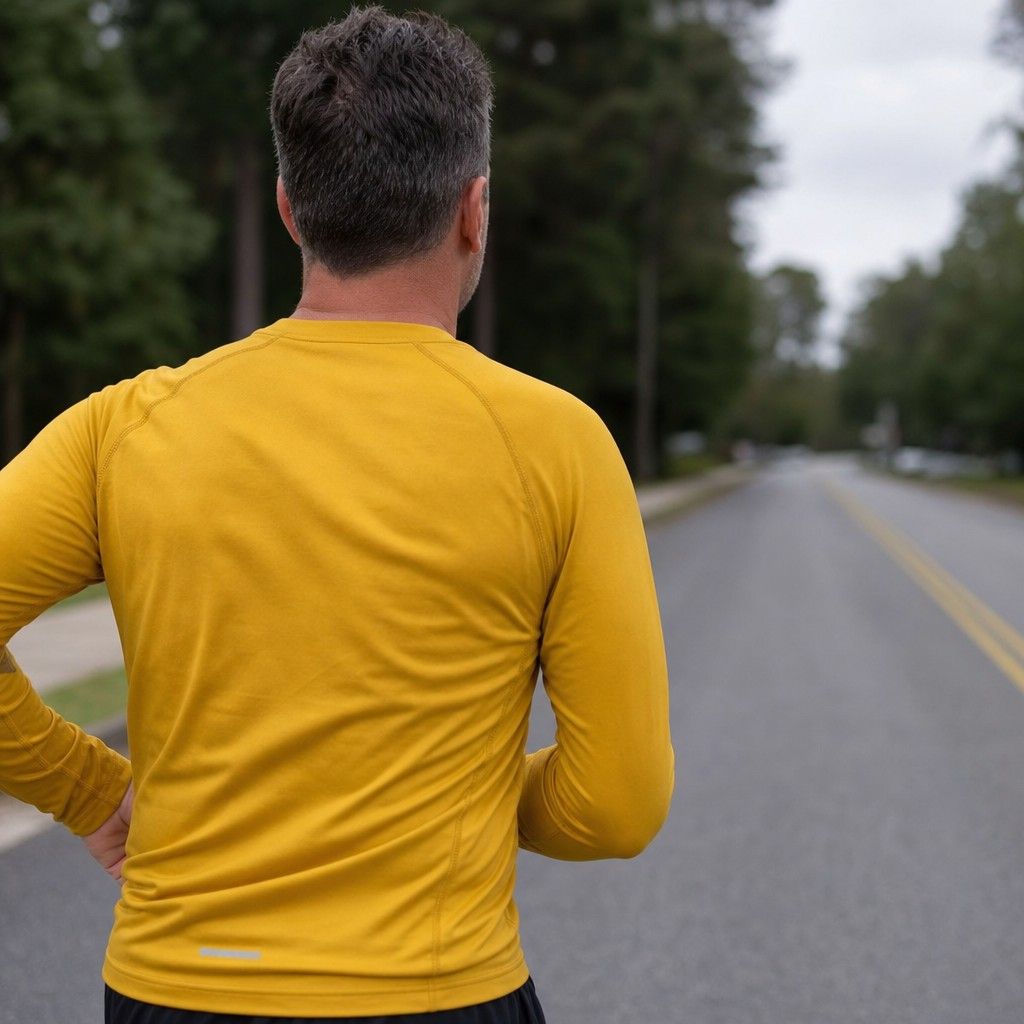
Overstriding is one of the most common form habits on a comeback, and one of the more punishing ones.
When your foot lands well out in front of your body, it acts as a brake. Each stride sends a jolt backward and upward through the knee and hip. Over a few miles, that adds up.
The fix is not dramatic. Take shorter, quicker steps rather than longer bounding ones.
A rough target that exercise physiologists often point to is around 170 steps per minute. You do not need a metronome. Just notice if your feet are landing far in front of you and shorten the reach a little.
Shorter stride, more steps, less impact. It will feel odd for a week and then normal.
A slightly higher cadence also nudges you toward landing with your foot closer to under your hips, where the body absorbs load most efficiently, rather than out in front, where it brakes.
Foot landing: under, not ahead
Midfoot landing, where the ball and middle of the foot touch down rather than the heel striking hard, does not require a technique course. Shortening your stride tends to produce it naturally.
If you have been running in cushioned shoes and heel-striking for years, a sudden full switch to midfoot can strain the calves and Achilles. Transition gradually, a few hundred meters of mindful form at a time, rather than overhauling everything in one session.
The same patience that applies to building endurance back slowly applies here.
Breathing: let it happen
New and returning runners alike sometimes hold tension in the breath. Short, shallow breathing compounds fatigue and tightens the chest.
The talk test is a useful check. If you can speak in short sentences while running, your effort level is roughly right for an easy day.
If breathing is labored to the point of not being able to speak, the pace is too high, not the form, and slowing down is the right answer.
Breathe out fully. The inhale takes care of itself when the exhale is complete. Some runners find a rhythm of two steps per inhale and two steps per exhale; others never count. Either way, if you are bracing the core so tight that the breath is shallow, ease off a little.
A simple way to practice
You cannot think about all of this at once on a run. Pick one thing per session.
Run for a few minutes, check posture. Run for a few more, notice the arm swing. Spend one short block focusing on your stride length. That is enough.
Here is a repeatable check-in to rotate through:
- Shoulders low and back from the ears?
- Hands loose, elbows roughly 90 degrees?
- Feet landing closer to under the hips than out in front?
- Eyes forward rather than down at the ground?
No need to nail everything at once. Small adjustments compound quietly over weeks.
Why this matters more on a comeback
Form habits from a previous running life do not always come back in their best version. If you were overstriding at 35, you are likely overstriding at 48, but on joints that have spent the intervening years off the clock.
The returning runner is not fragile. But the tendons and connective tissue need longer to adapt than the heart and lungs do. Good form distributes load more evenly, giving those structures a chance to catch up to the fitness.
Strength work supports the same process. Runners who pair form awareness with the kind of basic strength moves that protect hips, knees, and Achilles tend to hold their comebacks together. There is a practical guide to what that looks like for returning runners.
This is general information, not medical advice. If something hurts when you run or you are returning after an injury, check with your doctor before making changes to how you train.
Form does not need to be perfect. It just needs to be a little better than it was, carried consistently over a month that does not end with something broken down.
That is a comeback that holds.