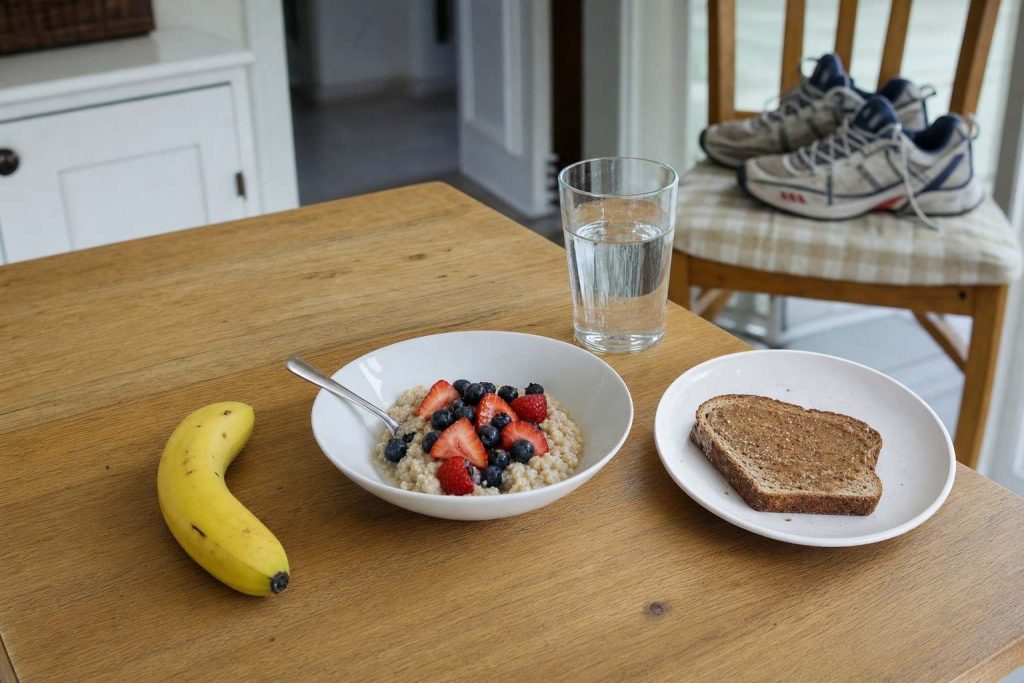
The nutrition industry loves a big promise. Optimize your macros. Time your protein windows. Eat like an athlete.
If you are forty-something and trying to get back into running three times a week, most of that advice is aimed at someone else.
Getting your eating right for a comeback is genuinely simpler than the marketing suggests. The goal is not a performance diet. The goal is food that supports showing up consistently.
What your body actually needs
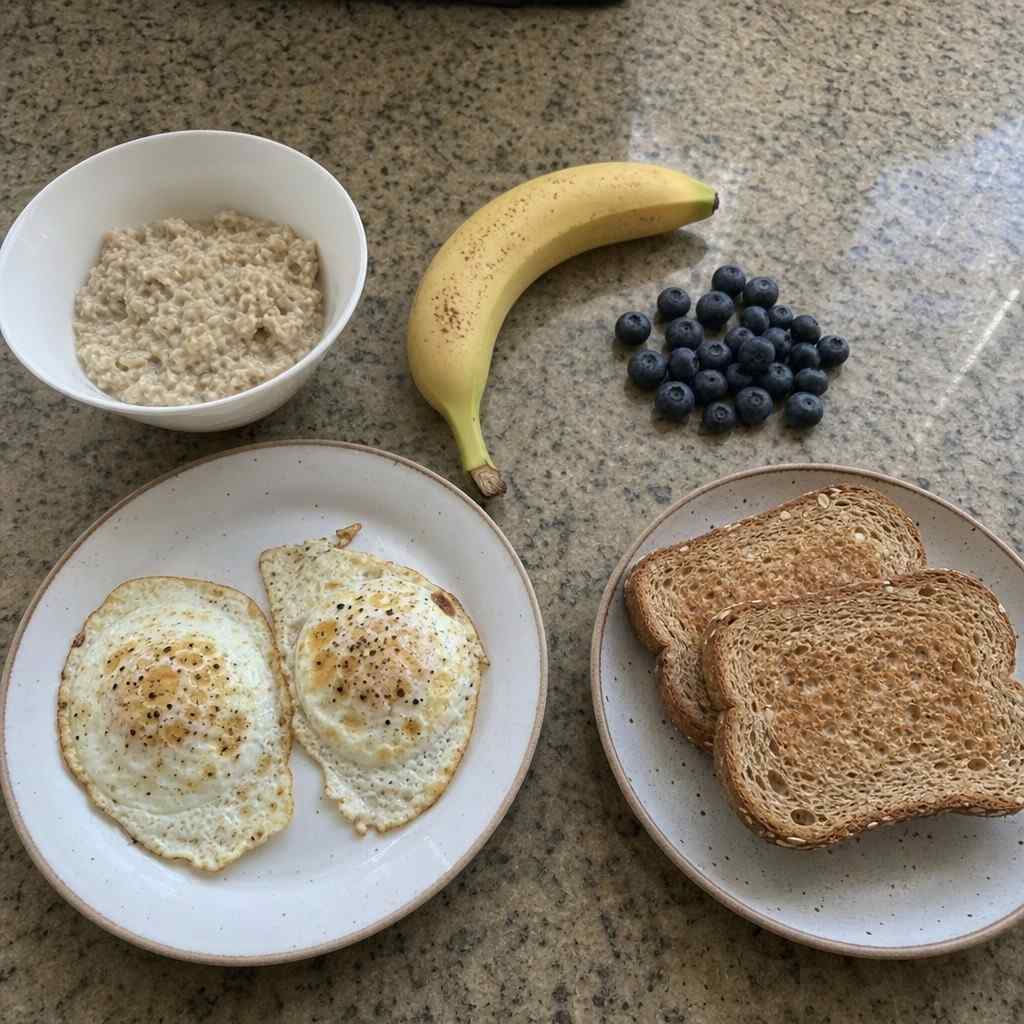
When you add regular walking or running sessions after years of less movement, three things change: you burn a little more energy, your muscles need material to repair, and your water loss goes up.
None of that requires a diet overhaul. It requires eating enough.
Carbohydrates are fuel, not the enemy. Whole grains, oats, bread, rice, fruit, potatoes.
They are the body’s preferred energy source for moderate movement. Cut them out on top of adding exercise and you will feel it: tired legs, low motivation, workouts that feel harder than they should.
Protein is the repair material. The American College of Sports Medicine suggests active adults benefit from somewhat more protein than sedentary people, often cited around 1.2 to 1.6 grams per kilogram of body weight.
For most returners that is not a dramatic change. Eggs, chicken, fish, beans, dairy, or tofu at most meals handles it without counting grams.
Fat rounds out the picture. It is not something to fear or track obsessively. Eat it as part of whole food and the rest largely takes care of itself.
The one thing most returners underdo
Hydration drops through the cracks.
You finish a 30-minute jog, you feel fine, you move on. But moderate activity in most US climates means real sweat loss, and low-grade dehydration accumulates across the week without obvious thirst.
A rough daily target for active adults is around half your body weight in ounces of water. On run days, drink a little before and a little after. In summer heat, add more.
Thirst is a lagging signal, not an early warning.
A plain water bottle on the counter you refill twice a day handles most of this. No supplements or electrolyte products needed for sessions under an hour in normal conditions.
Timing: does it matter?

A little, and only in one direction.
Eating a large meal right before a run feels exactly as bad as it sounds. Aim for at least an hour between a full meal and a session. A small snack, a banana or a handful of crackers, fifteen to thirty minutes before a shorter run is fine for most people.
After exercise is where timing has the clearest payoff. A meal or snack with some protein and carbs within an hour or two of finishing helps muscle repair. This does not need to be a protein shake. Regular food works.
Nutrition timing on comeback mileage is a dial, not a switch. Small adjustments around your sessions are enough.
If you are building your habits around how to rebuild endurance the patient way, the fueling principles here run alongside the same logic: consistent and sensible beats precise and complicated.
The myth worth letting go
Nutrition is often framed as the dominant variable in fitness results. You have probably seen some version of “abs are made in the kitchen” or heard that food is 70 percent of the outcome.
For a returner whose goal is to get fit and stay healthy, that framing is misleading.
Consistency in training is what rebuilds a base. Food supports that consistency. It is not competing with it or overriding it.
Someone who eats imperfectly but gets their three sessions in each week will almost always do better than someone optimizing macros but skipping sessions. The nutrition conversation is worth having. It should not crowd out the training conversation.
A few practical things that help
- Eat before you are starving. Hunger that builds all day leads to eating past what you need in the evening.
- Do not add restriction on top of new exercise. Your body needs fuel for the sessions you are adding. Cutting calories sharply at the same time as ramping movement is a recipe for burnout.
- Keep the pre-run and post-run food simple. Whole food, normal portions.
- Notice what leaves you feeling good versus sluggish on run days, and lean toward the former.
The recovery side of the picture connects here too. Sleep and rest are when the body does the repair work that protein and carbs make possible. Food and recovery are the same system.
What a decent eating week looks like
No template works for everyone, but a useful rough shape:
- Most meals built around vegetables, whole grains, and a protein source
- Fruit or a small carb snack within thirty minutes before shorter sessions
- A proper meal, not a tiny snack, within a couple of hours after longer runs
- Water as the default drink; coffee and tea are fine, just add water on top
- Alcohol in moderation, since it disrupts sleep and recovery more than most people account for
That is not a performance diet. It is just eating well enough to support the training you are actually doing.
Nothing here requires tracking apps, supplement stacks, or expensive food. If you are eating real food, roughly enough of it, and not running on empty most days, you are probably in better shape nutritionally than you think.
This is general information, not medical advice. If you have a health condition that affects how you eat or process food, check with your doctor before making changes.