
Most people who come back to running get hurt within the first few months. Not because they are too old, not because their knees are shot.
Too much, too soon. That is the culprit in the vast majority of comeback injuries, and it is fixable.
Running injury research points consistently at sudden spikes in load as the driver of overuse problems. The body adapts to running, but only at the rate you give it. Rush the ramp and something gives.
The good part: the common injuries have common causes, and the causes are avoidable.
The 10 percent guideline actually works
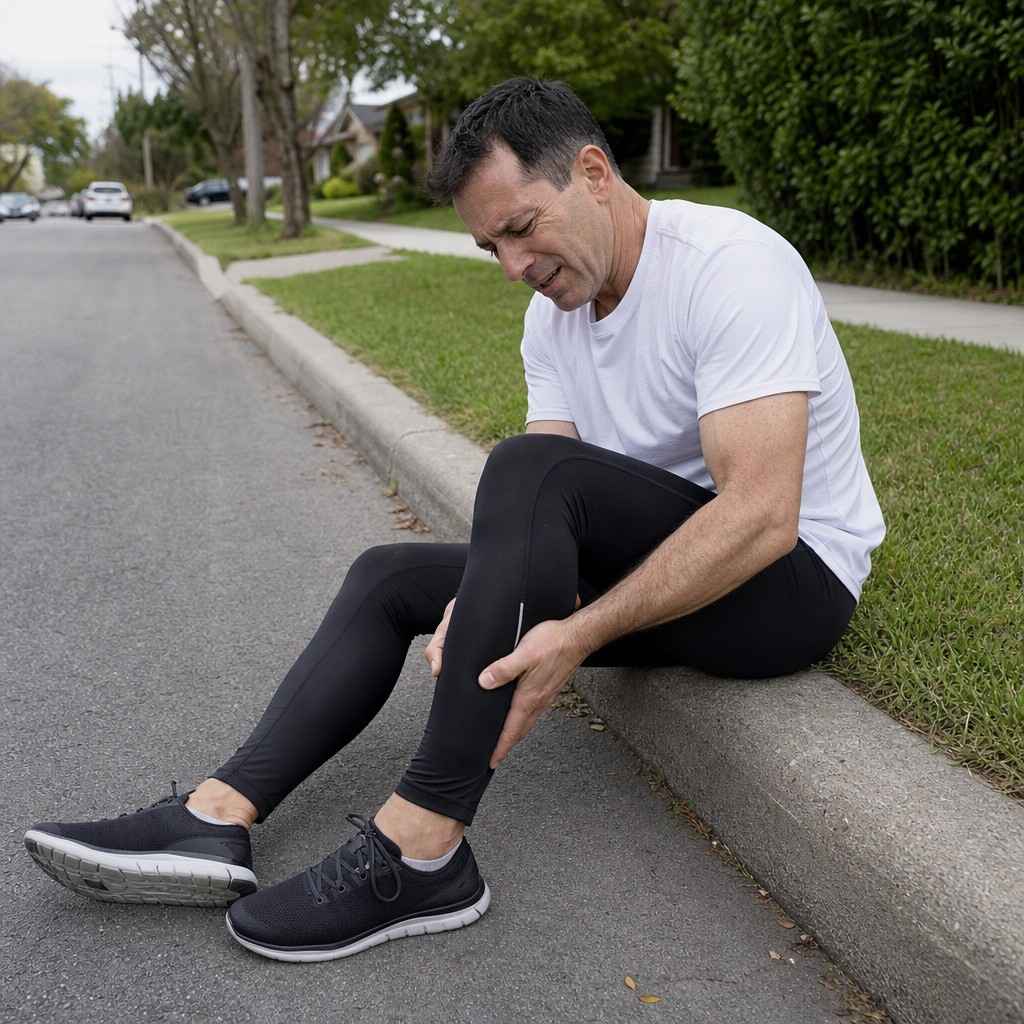
Runners who have been away for years tend to underestimate how much their tendons and connective tissue have deloaded. The lungs come back quickly. The framework takes longer.
The practical guideline most coaches and sports medicine guidance points to: keep weekly increases under 10 percent. If your week totals 20 miles, next week caps at 22. It feels unnecessarily slow.
That is exactly why it works.
A couple of minutes more on your feet, week over week, is not glamorous progress. It is the kind of steady ramp that keeps a comeback going past month one.
The injuries that catch returners most often
Understanding what you are actually guarding against makes the precautions feel less arbitrary.
Here are the four that sideline returning runners most reliably:
- Shin splints tend to hit in the first weeks, when the tibia is absorbing load it has not seen in years. Running on tired legs or hard surfaces accelerates them.
- Runner’s knee (patellofemoral pain) follows closely, usually tied to weak hip and quad support rather than the knee itself. The joint takes the blame for a stability problem higher up.
- Plantar fasciitis builds quietly, a slow tightening through the heel that becomes sharp overnight. Skipping warm-ups and worn-out shoes are common accelerants.
- Achilles tendinopathy rewards one thing above others: a sudden jump in mileage or pace after a rest period. The Achilles is slow to adapt and slow to heal.
None of these are random. They follow a pattern: load increases faster than the tissue adapts.
The injury is not the problem. The ramp is.
Shoes: the process matters more than the brand
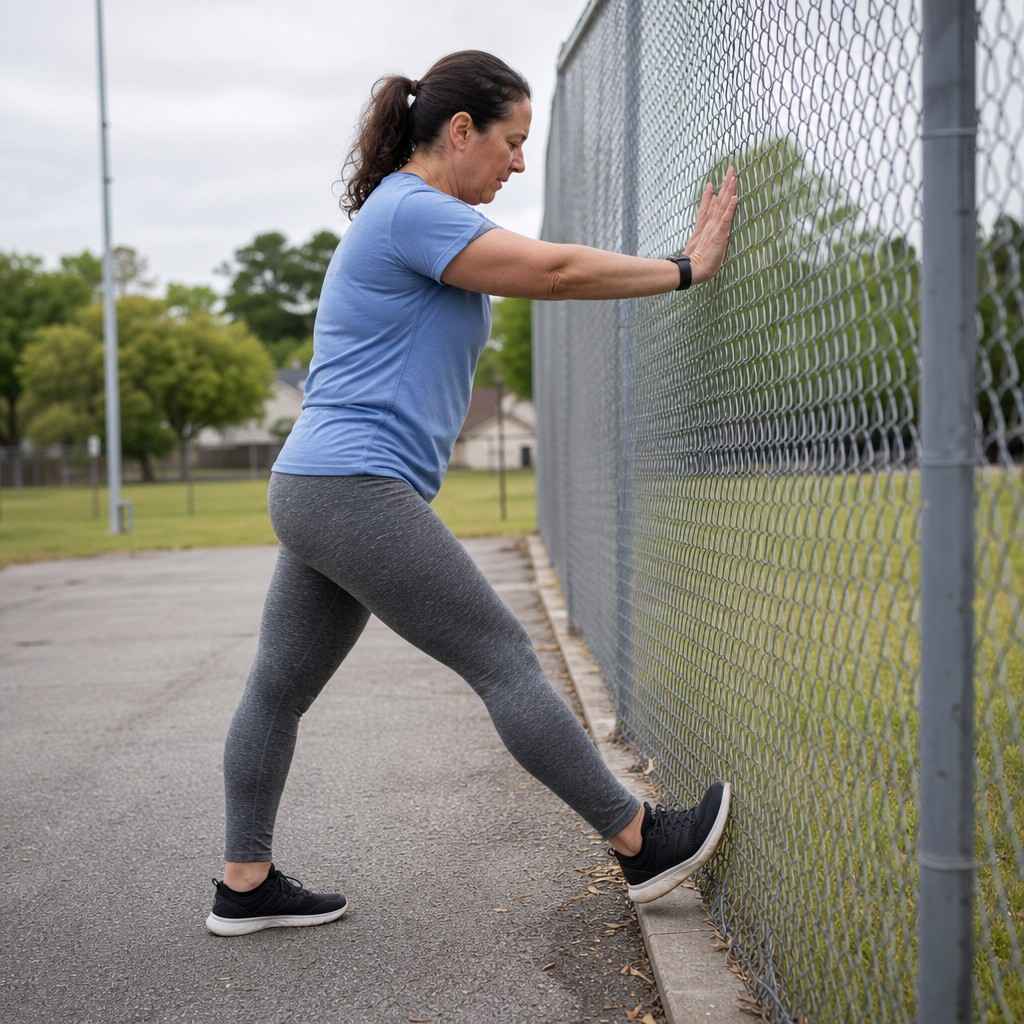
Shoe choice is genuinely worth attention, but the specific model matters far less than the fit and condition.
Two things are worth checking before the next run.
First, how old is the pair? Running shoes lose most of their cushioning well before they look worn. If the midsole has compressed, you are essentially running on less protection than you think.
Second, have you had a gait check recently? A specialist at a running store can watch you walk or run and match you to a shoe that suits how your foot lands. The process takes ten minutes and removes most of the guesswork.
The shoe serves the comeback. The comeback does not wait for the perfect shoe.
Rest days are part of the plan, not gaps in it
One of the instincts that trips returning runners is the idea that rest means falling behind.
It does not. Adaptation happens in recovery, not during the run.
Plan for one to two full rest days per week, and on those days, the rest is the training. Cross-training fills them well: cycling and swimming keep aerobic fitness moving without adding impact load to the same structures that running stresses.
If you want the full case for mixing in other modes, building a varied week makes this argument in more detail.
Strength work closes the gap before the gap becomes an injury
After a long break, your aerobic fitness typically comes back faster than your tendons and muscles do. Running gives the engine more fuel than the chassis can handle.
Strength closes that gap. Two short sessions a week on the hip stabilizers and core takes direct pressure off the knee and Achilles, the two sites that suffer most on a comeback. The specific moves worth building into a week do not need a gym and take about twenty minutes.
It is not supplemental. It is what lets the running continue.
Catching warning signs before they become injuries
Most overuse injuries announce themselves before they become a real problem.
A dull ache at the end of a run that fades within an hour is normal muscle adaptation. Pain that is still there the next morning, that sharpens during a run, or that appears in the same place three sessions in a row deserves attention.
Pain in the same spot, run after run, is a signal, not a coincidence.
A simple habit: after each run, briefly note where anything felt off. Not a training log, just a mental check. Patterns catch problems early.
If something stays sore for more than a few days, pulling back for a week costs almost nothing. Pushing through to the point of a real injury costs weeks or months.
Putting it into a week
The practical shape of an injury-aware comeback week is not complicated.
- Two or three easy runs where you can hold a conversation without gasping
- One longer session, still easy, to stretch your time on feet
- One to two strength sessions, twenty minutes, focused on hips and core
- At least one full rest day, or a cross-training day that keeps you moving without the impact
No single element is the fix. The combination is what makes a comeback durable.
This is general information, not medical advice. If you are returning after an injury, a long gap, or have a health condition, check with your doctor before ramping up.
The runners who make it past month two are not the most motivated ones. They are the patient ones.