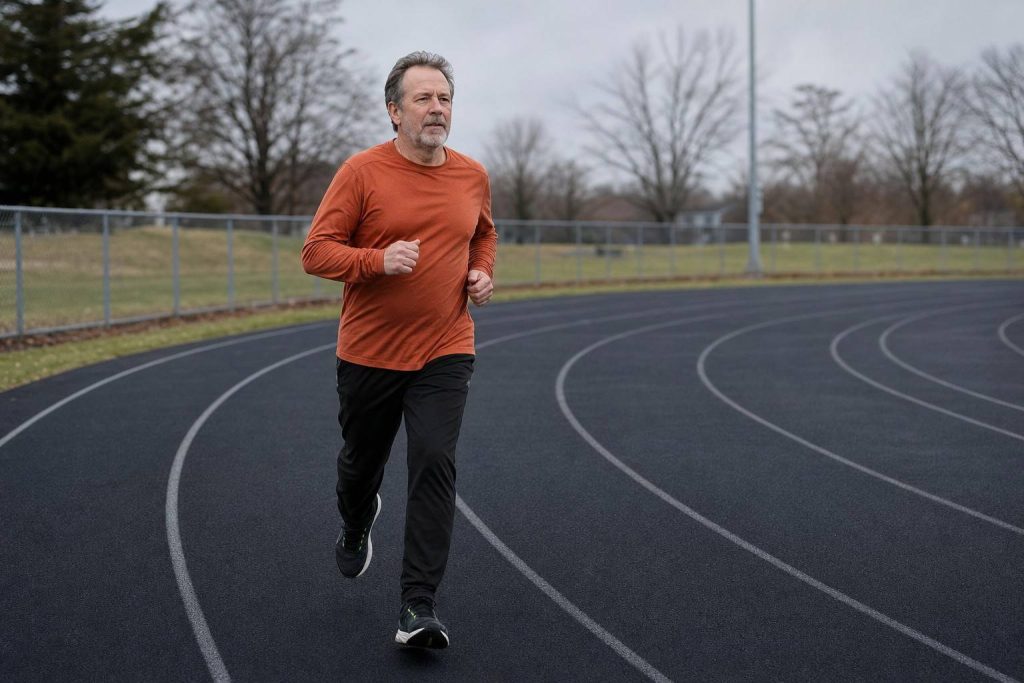
The fear is almost universal among people coming back to exercise: that the years off erased everything, and they are starting from scratch.
The physiology says otherwise.
Fitness you built once comes back faster than it built the first time. Not all of it, and not all at once, but the body keeps more of its old training than most returners expect. The trick is knowing which parts come back quickly, which lag, and which one is quietly setting you up for an injury.
Here is what the science actually shows, and what it means for how you plan a comeback.
First, the part nobody wants to hear
Detraining is real. When you stop training, fitness fades, and the aerobic side fades first.
Exercise physiologists studying detraining have found that measurable aerobic capacity starts slipping within a couple of weeks of stopping. A noticeable chunk can be gone within a month or two of doing nothing.
That is the decline you feel as breathlessness on a flight of stairs that never used to register.
So if you feel dramatically worse than you remember, you are not imagining it.
But “faded” is not “erased.”
A base built over years does not vanish at the same speed it would for someone who was never fit. And the moment you start again, the rebuild begins, often quickly.
Why the comeback is faster the second time
This is the part competitors gloss over, and it is the most encouraging finding in the whole picture.
Muscle appears to keep a physical memory of past training. Research on previously trained muscle shows that it regains size and strength faster than muscle that was never trained, and scientists link this to cellular changes laid down during the original training that are not fully lost during a layoff.
In plain terms: your muscles have done this before, and they know the way back.
Coming back is not starting over. Your body is re-reading a map it already drew.
This is why a former runner returning at 50 typically progresses faster in the first months than a true never-runner of the same age. The engine and the muscle remember. That head start is real, and it is yours to use.
The catch: different systems heal at different speeds
Here is the insight that changes how you should plan, and the one that protects you from the classic comeback injury.
Your body is not one system coming back at one rate. It is several, and they recover on different clocks:
- Heart and lungs (aerobic fitness): respond fast. Weeks of consistent easy effort bring noticeable gains.
- Muscles (strength and size): come back quickly for the previously trained, helped by that muscle memory.
- Connective tissue (tendons, ligaments, the attachments): adapts the slowest of all, and it does not have a shortcut.
That last line is the whole game. Your fitness and your muscles can race ahead while your tendons are still weeks behind, and that gap is exactly where a returning runner picks up an Achilles complaint or a sore knee.
You do not get hurt because you are unfit. You get hurt because one part of you recovered faster than another.
The lesson is not to hold back the parts that come back fast. It is to respect the part that does not. A gentler ramp gives the slow tissue time to catch up to the quick engine. The patient case for rebuilding endurance the gentle way is built directly on this asymmetry.
So how long, really?
Honest answer: it depends on how fit you were, how long you were off, and how patiently you ramp. But some realistic shapes hold up:
- The first two to four weeks: you feel clumsy and winded, then suddenly less so. Early gains come fast because the aerobic system responds quickly.
- The first two to three months: a former exerciser often rebuilds a usable base, with the muscle memory advantage doing real work.
- The full picture: getting back to a previous peak can take longer, and the connective tissue is the rate-limiter, not the cardio.
Notice that none of this is measured in years for the everyday returner. The discouraging stretch is the first few weeks, and it ends.
What to do with all this
The science points to a simple plan. It is the opposite of how most people attack a comeback.
- Trust that the engine and muscles will come back. They will, faster than you fear.
- Aim for the general activity target most health bodies agree on, around 150 minutes of moderate activity a week, and hit it consistently before chasing intensity.
- Protect the slow tissue: ramp volume gently, keep most efforts easy, and add a little strength work to support the tendons and joints.
- Expect the early weeks to feel worse than your memory, and keep going anyway. That feeling is the steepest part of the curve.
Coming back after a long gap is one of the situations where the body is more forgiving than the mind. The numbers fade, the discouragement is loud, and then the old fitness starts answering the call sooner than it has any right to.
This is general information, not medical advice. If you are returning after a long break, an injury, or a health condition, check with your doctor before ramping up. The right first runs after 50 and a sensible plan to avoid the common comeback injuries matter more than how fast you think you should be.