
The hardest part of a running comeback is getting off the couch and staying off it long enough to see progress. If you have crossed that first hurdle, with a few weeks in and the habit holding, you are already past the part most people quit.
Now the question shifts.
It is no longer “how do I start?” The question is: what actually moves the needle on running endurance from here?
The answer is not harder workouts. It is using the right levers in the right order. Most returning runners get three or four of these wrong and wonder why they have plateaued by week six. Here is what research on returning athletes and basic exercise science actually points to.
If you are still in the very early “getting back on your feet” phase, the guide to rebuilding endurance from scratch is the better starting point. This article picks up once you are moving consistently.
The weekly long easy run

One session per week carries more weight than any other single variable in building aerobic endurance: the long, easy run.
Easy is the operative word.
According to the American College of Sports Medicine, the bulk of aerobic development happens at low to moderate intensity. The long run is not a test of fitness. It is a stimulus for adaptation, and that adaptation requires you to be in a zone where your body can sustain the effort without tapping into recovery reserves.
Keep pace conversational, add time slowly.
A practical cap for weekly long-run growth is about 10 percent longer each week, with a step-back week every three to four weeks to let the body absorb what it has been given. That rhythm feels frustratingly slow when you want to be moving again. It also works.
The long run builds the aerobic engine that everything else sits on top of.
Strength training is not optional
Here is the lever most returning runners ignore until something hurts.
Strength training does not just prevent injury. It makes you a more efficient runner by building the load capacity in the muscles and connective tissue that take the brunt of every stride, and by improving the stability that keeps form from falling apart in the second half of a run.
You do not need a gym membership for this. A basic routine that targets:
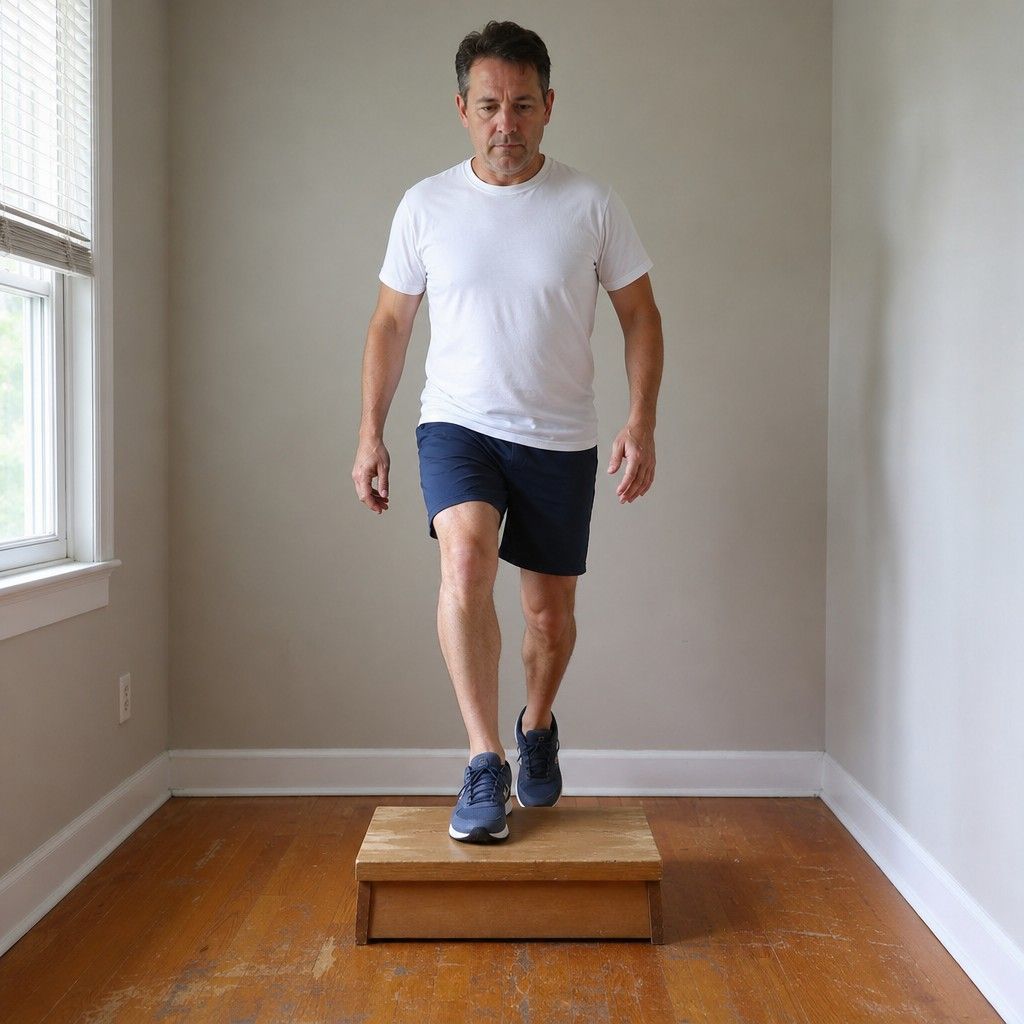
- Single-leg work (step-ups, split squats, single-leg deadlifts)
- Hip and glute strength (glute bridges, clamshells, lateral band walks)
- Calf resilience (slow heel raises, eccentric lowering)
…done twice a week on easy or rest days adds real durability. One of the clearest benefits of mixing in cross-training, including structured strength work, is staying consistent through a comeback without a layoff. You can read more about the argument for cross-training variety on a comeback.
Two strength sessions a week is the standard recommendation. Not five. Not zero.
The easy/hard balance most returners get backwards
A pattern shows up reliably in returning runners who plateau or get hurt: they run too hard on easy days and not hard enough on hard days, which means every session lands in a grey zone that does not fully develop either aerobic capacity or recovery.
Most of your running week should be genuinely easy.
One slightly harder session, once a week, is where the quality work lives. Not two, not three.
The easy days are not recovery from the hard day. The easy days are where the aerobic base actually grows.
That distinction matters. Easy runs are not placeholders between hard efforts. They are doing specific physiological work. Keeping them truly easy means your body can handle the accumulated volume without breaking down.
A sensible week for a returning runner might look like this:
- Two easy 25-30 minute runs at a pace you can talk through
- One long easy run (40-60 minutes), still conversational
- One session with some moderate effort mixed in (strides, a few tempo minutes, or a hilly route)
- At least one day off running entirely, or a strength session instead
Gradual progression is not a metaphor
The phrase “build gradually” has become so routine it stops meaning anything.
Here is what it actually means in practice: your running volume (time on feet per week) should not jump more than roughly ten percent in a single week. More than that, and the connective tissue load outruns the body’s ability to adapt.
The tissue adapts more slowly than the cardiovascular system does.
That asymmetry is why a returning runner who feels aerobically capable still picks up a calf strain or an Achilles complaint. The lungs were ready, the tendons were not. Boring, consistent weekly increments close that gap.
Overdoing it when motivation is high is the most predictable comeback mistake there is.
A step-back week every three to four weeks, where volume drops by 20-30 percent, is not weakness. It is when the adaptation actually locks in.
Breathing and cadence as efficiency levers
Two things affect how far you can run on a given energy budget without building more aerobic capacity: breathing mechanics and stride cadence.
Breathing through the nose at easy pace encourages diaphragmatic breathing and keeps heart rate lower. Mouth breathing at easy pace often signals you have drifted out of the easy zone. A simple check: if your breathing feels labored, slow down.
Cadence, meaning your strides per minute, affects how much ground force your legs absorb with each step. A cadence that is too low tends to mean overstriding, which increases impact and wastes energy.
The commonly cited target of around 170-180 steps per minute is derived from observations of efficient recreational and competitive runners. The practical adjustment is simpler: take slightly quicker, shorter steps rather than reaching out with a long stride. You will feel less pounding and run further before fatigue hits.
Neither of these replaces volume or progression. They are efficiency margins that make the work you are already doing go further.
This is general information, not medical advice. If you are returning after an injury or a significant gap, or have a health condition, check with your doctor before ramping up your training.
Endurance does not come from one good week. It comes from consistent, moderate weeks stacked on top of each other, with strength and variety keeping the body able to keep showing up.
The levers are not complicated. They just require patience at the exact moment motivation makes you want to do more.