
Most runners coming back after 50 hit the same wall. The runs feel fine, but the aches afterward linger longer than they used to.
That is not a sign to stop. It is a sign the body needs a little support that mileage alone cannot give.
Strength work is that support. Running sends ground forces of roughly two to three times your body weight through each stride, and the muscles around your joints are what absorb it. Keep those muscles strong and the comeback holds. Let them fade and the niggles take over.
The good part: the moves that matter are simple, need no gym, and take about twenty minutes.
Why it matters more on a comeback
After a long break, your heart and lungs come back faster than your muscles and tendons do. The fitness outruns the framework. That gap is where returning runners get hurt.
Strength training closes it. It steadies the muscle imbalances that creep in with age, props up your running form, and protects old injury sites from flaring again.
It also makes you a more efficient runner. Stronger glutes, hamstrings, and core mean you hold a pace using less energy.
The goal is not to lift heavy. It is to give your joints a crew that shows up for every mile.
This is general information, not medical advice. If you are returning after time off or managing a health condition, check with your doctor before starting.
Bodyweight squats
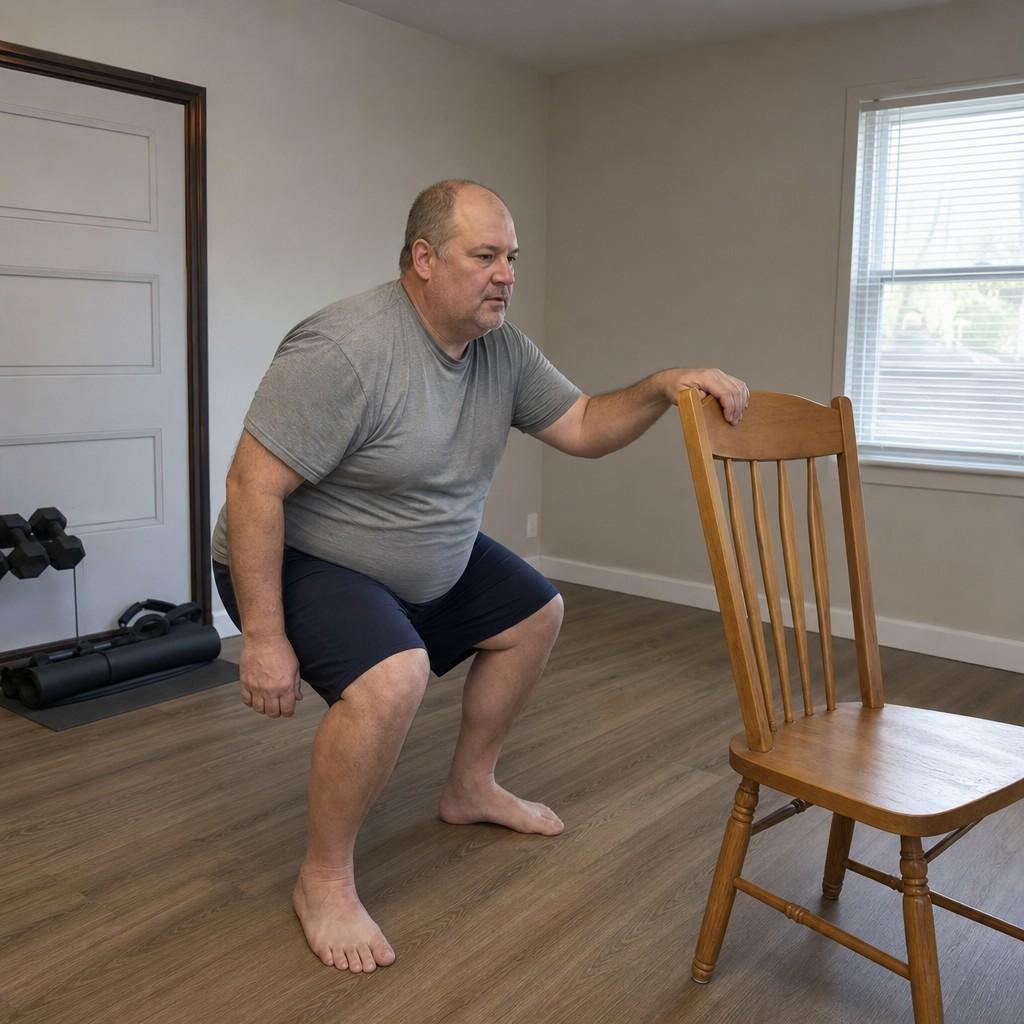
When your knees have logged thousands of miles, heavy weighted squats often ache for days. Bodyweight squats build the same leg power without the punishment.
Keep it gentle and build from there:
- Lower only to a depth that feels comfortable. Partial squats still work.
- Use a chair for support until your strength catches up.
- Aim for 2 to 3 sets of 10 to 15 reps, about three times a week.
Comfort first, depth later.
Step-ups and lunges
Running moves you forward one leg at a time, yet most exercises work both legs at once. Step-ups and lunges fix that.
They mirror running’s single-leg demand while building stability around your knees and hips.
Start with step-ups onto a low platform, six to eight inches, and move with control rather than speed. Get comfortable with a basic lunge before adding any weight. Both train your quads, hamstrings, and glutes while sharpening the balance that keeps you upright on uneven ground.
You run on one leg, so train on one leg.
Calf raises and planks
Your calves and core do quiet, constant work on every run. They are worth a few minutes each.
Calf raises shore up the ankles and Achilles, the spots that complain loudest on a comeback. Single-leg versions add balance on top.
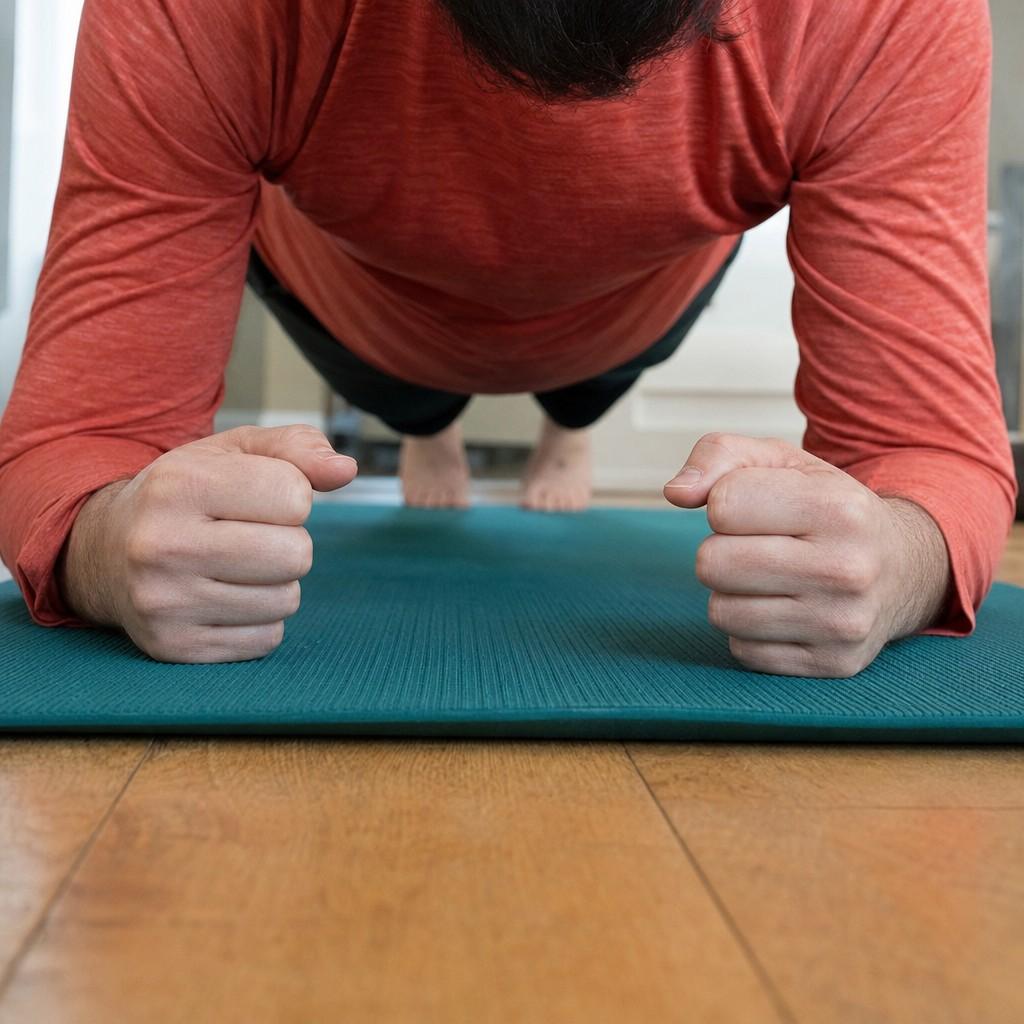
Planks train the deep core that holds your pelvis and spine steady. That is what keeps your form from falling apart late in a run and takes strain off your lower back.
Start where you are and add a little each week.
Modified push-ups and rows
Strong shoulders and upper back are not vanity. They hold the upright posture that keeps your stride efficient as the years add up.
Do push-ups on a counter or with your knees down to spare your wrists. Add band rows to strengthen the upper back and counter the forward lean a lot of older runners drift into.
Two short sessions a week is enough to feel it in your arm drive on longer runs.
The injuries this work heads off
After 50, running pounds the joints the same as ever, with a little less natural cushioning. Targeted strength builds protection around the vulnerable spots.
Here is what a steady routine tends to guard against:
- Achilles trouble: stronger calves and ankles absorb impact better
- Runner’s knee: quad and glute work steadies how the kneecap tracks
- IT band pain: hip strengthening eases friction along the outer thigh
- Lower back ache: posterior-chain work protects the spine each stride
Resistance training also supports bone density over time, which matters more with age. The exact numbers vary, so treat it as one more reason to keep at it, not a guarantee.
Putting it into a week
You do not need a complicated plan. You need a repeatable one.
Two or three sessions a week, with a rest day between, gives your muscles room to adapt. Each session, pick five to eight moves across the major muscle groups: a squat, a lunge, a calf raise, a plank, a push-up.
Add a little resistance or a few reps as it gets easier. Warm up with some easy movement, and you are done in twenty minutes.
The same logic that rewards rebuilding your endurance slowly rewards strength work: small, boring, repeatable beats heroic. It pairs naturally with the case for mixing different kinds of training so no single motion wears you down.
Strength is what turns running again into running for good.