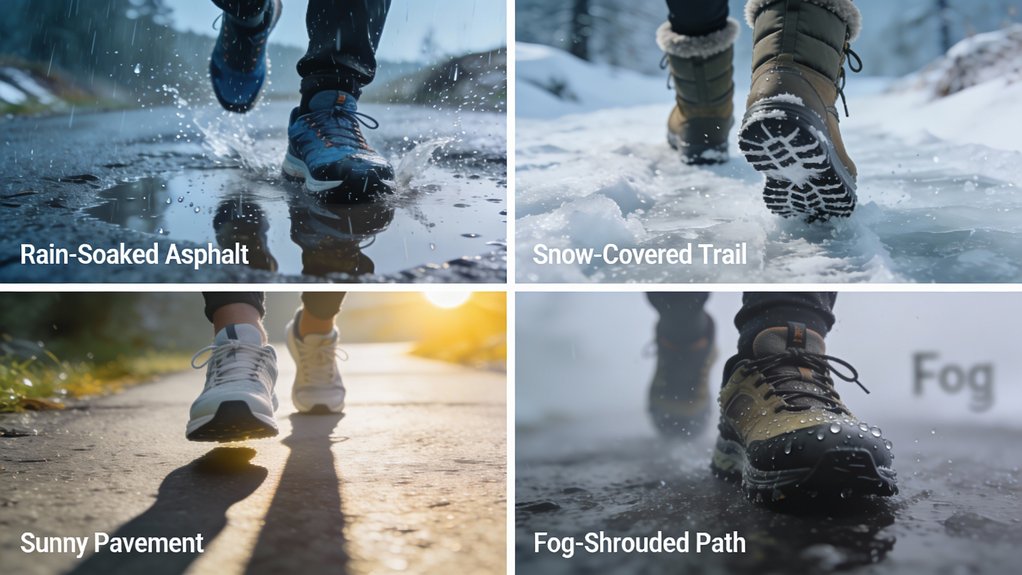
Most comebacks do not stall because of motivation. They stall because the weather changes and nobody has a plan.
A streak of hot mornings, an early cold snap, two weeks of rain. Any one of those can quietly break a habit that was going well.
The good news is that none of these conditions require heroism. They require a small adjustment and the willingness to call it good.
This is general information, not medical advice. If you have a health condition that affects how your body handles heat or cold, check with your doctor before heading out in extremes.
Heat: slow down before the day heats up
Summer running is a different sport than spring running. The body is doing two things at once: moving and cooling itself. Both cost energy.
The simple fix is earlier or later. A morning session before 8 a.m., or an evening session after the temperature starts dropping, makes a meaningful difference. Midday heat in summer can be genuinely risky, not just uncomfortable.
When you do go out in heat, slow your pace by more than feels necessary. A pace that feels easy in 60-degree weather will feel hard at 80 with humidity. That is not weakness. That is the body redirecting resources to cooling.
A few habits that hold up:
- Drink water before you go out, not just during
- Wear light-colored, moisture-wicking fabric so sweat can evaporate
- Shorten the session if conditions are worse than expected
Stop if you feel dizzy, nauseous, or your skin stops sweating. Those are signs the body is not coping. Heat exhaustion is not something to push through.
In real heat, a shorter, slower run is not a failed run. It is a smart one.
Cold: warm up longer, layer better
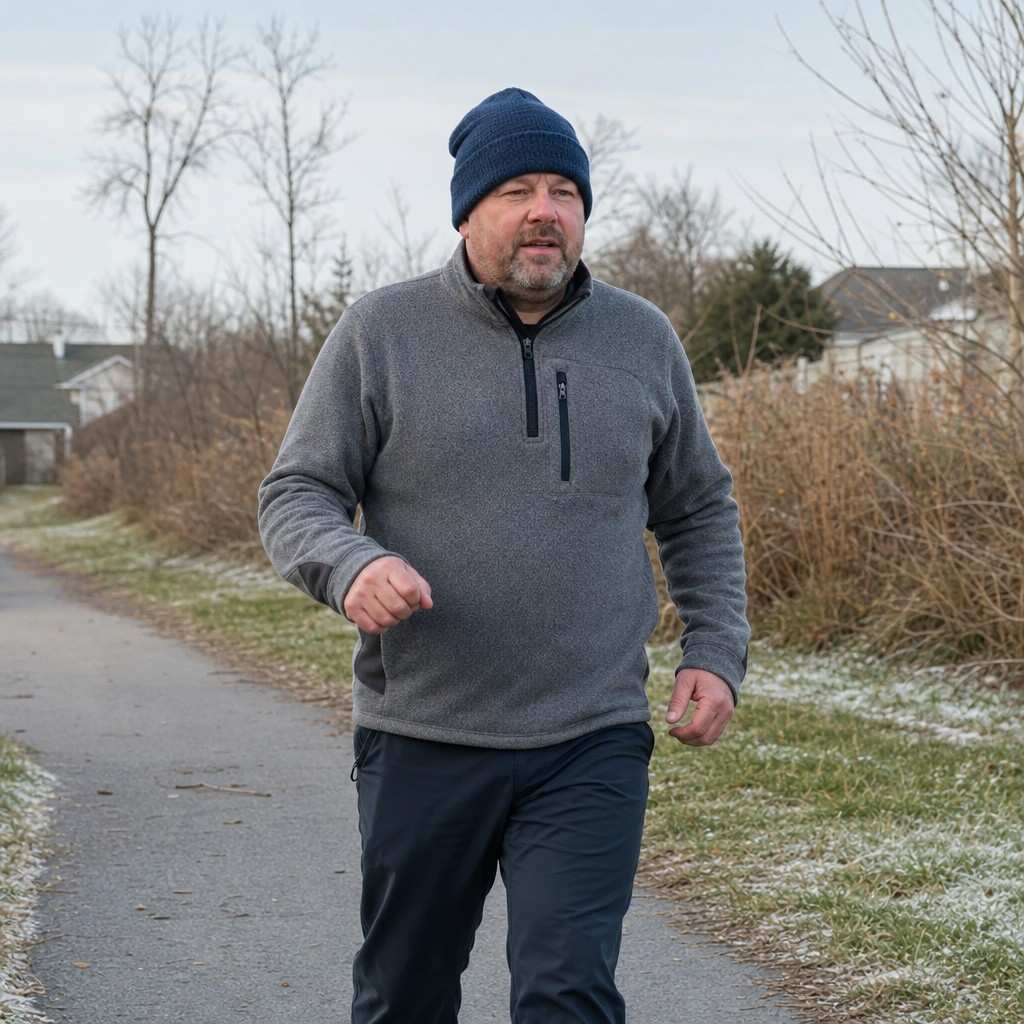
Cold air narrows blood vessels and stiffens joints. The body’s first 10 to 15 minutes of a cold-weather session feel worse than they actually are.
The real mistake is skipping the warm-up. Walk for five to ten minutes before picking up any pace. The muscles warm from the inside and the session gets easier.
Layering works on a simple principle: start slightly underdressed rather than overdressed. Once you are moving, the body generates enough heat that you will feel 10 to 15 degrees warmer than the air temperature.
A baseline setup for cold-weather sessions:
- A moisture-wicking base layer against the skin (cotton traps cold sweat)
- A light insulating mid-layer, fleece or a synthetic pullover
- A wind-resistant shell if it is below freezing or gusty
- Gloves and a hat, both removable
Protect fingers, ears, and toes first. Extremities lose heat fastest. If your fingers go numb or tingly before you are even warmed up, that is a signal to turn around.
The cold-weather window that works best is usually late morning, roughly 10 a.m. to 1 p.m., when temperatures peak. This is the reverse of the summer logic, and it is worth remembering.
Rain: visibility and dry feet
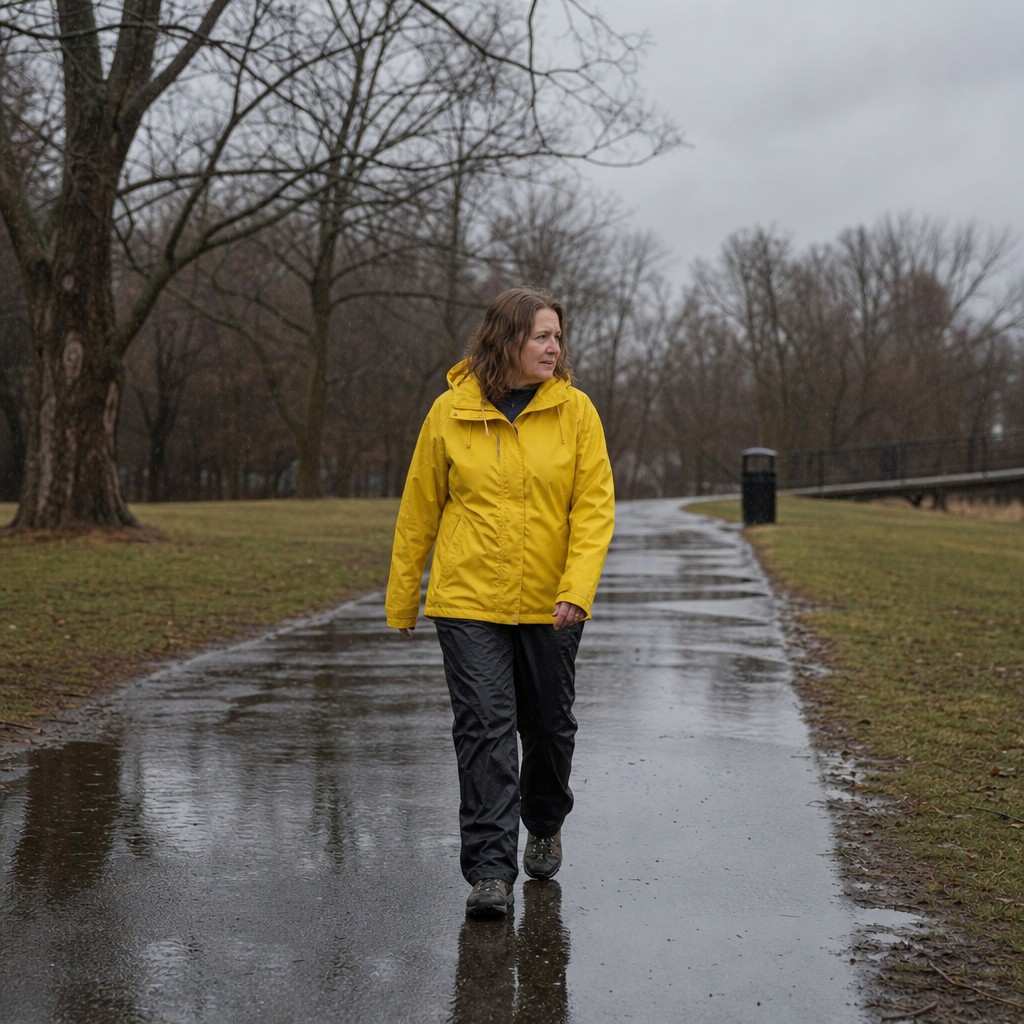
Rain is mostly an inconvenience, not a risk, as long as two things are handled: staying visible and keeping the feet from blistering.
Visibility matters more in rain than most people assume. Drivers have reduced sight lines, and runners are not where drivers are looking. Anything reflective helps. A small clip-on light or a vest with reflective strips is worth keeping in a drawer for rain days.
For feet, moisture-wicking socks do most of the work. A waterproof shell on top keeps the rain off. A fully waterproof shoe can trap sweat if the session is long enough; for short runs, a quick-drying trail shoe often works just as well.
Wet surfaces, especially painted road markings, metal grates, and leaves on pavement, are genuinely slippery. Shorten your stride slightly and plant your feet more deliberately. It is not dramatic; it is just the adjustment that prevents a rolled ankle.
If rain is heavy enough to reduce visibility to the point where you cannot be seen by traffic, it is a reasonable day to go indoors. A treadmill session or a short strength circuit at home is not giving up. It is keeping the streak alive.
Dark months: be seen, move the session, use the indoors
The hardest stretch for most comebacks is not summer heat or a cold spell. It is the long dim middle of winter, when sessions happen before dawn or after dark, the light disappears by late afternoon, and going outside takes more will than it did in September.
Visibility is the first problem, and it is easy to solve. A headlamp, a chest clip light, and a layer with reflective panels cover it. The goal is to be seen from a meaningful distance, not just technically present.
The second problem is mood. Less daylight affects energy and motivation in ways that are real, not imaginary. A few things help:
- Move the session to a lunch break or early afternoon when daylight exists
- Use indoor options without shame: treadmill, stationary bike, a strength circuit at home
- Keep the session shorter if that is what it takes to keep doing it
The indoor options that work best for a comeback are the ones already on the how to start walking for fitness and staying motivated to exercise year round pages. A treadmill walk or a 20-minute strength session counts. Keeping a habit imperfect beats losing the habit cleanly.
The dark months are where consistency either holds or breaks. What carries most people through is not a heroic commitment. It is removing the obstacles: a headlamp by the door, an indoor option ready, a session short enough to happen.
The pattern across every season
There is a version of every season that a comeback can work with.
Hot: go earlier or later, slow down, drink water. Cold: warm up longer, layer sensibly, protect the extremities. Rain: stay visible, stay dry underfoot, shorten the stride. Dark: be seen, use indoor options, keep the session small enough to keep happening.
The plan is never fixed. The habit is.
The point is not to train through conditions that are genuinely unsafe. It is to have a small set of adjustments ready so that weather is a reason to adapt, not a reason to stop. A comeback built to handle the seasons is one that keeps going.