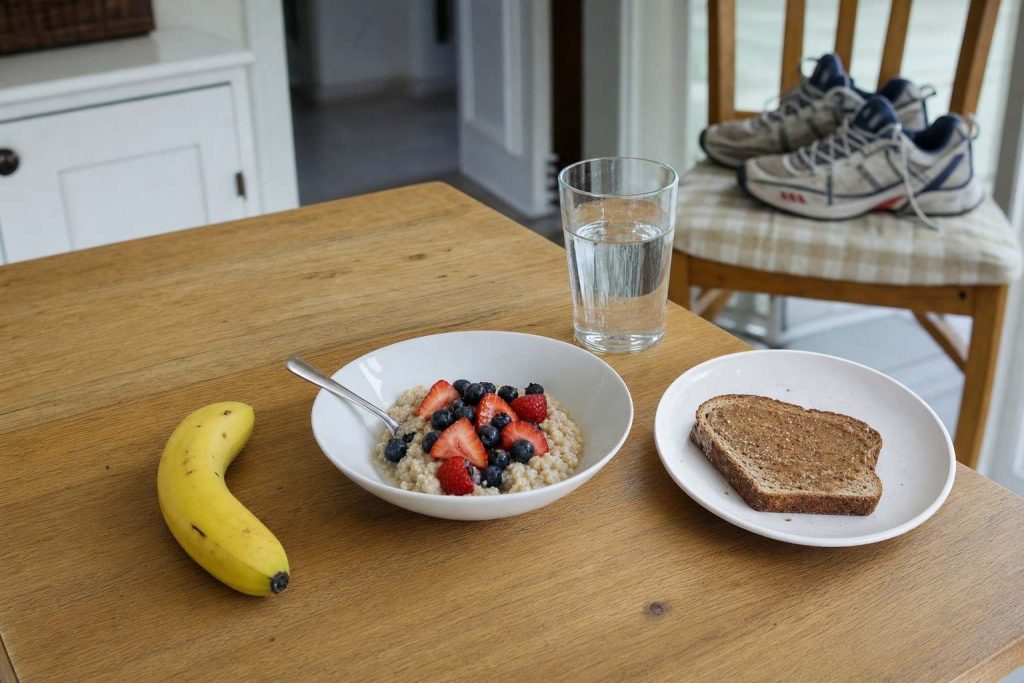
Cold muscles and returning muscles are the same problem. Both are less pliable, less ready to absorb load, and more likely to complain after the first half mile.
When you are rebuilding a base after a gap, skipping the warm-up is a tax you pay later.
Five minutes before you start is cheap insurance. The moves are simple, nothing fancy, and they do the thing static stretching does not: they get blood moving into the tissues before you ask those tissues to work.
Why dynamic, not static
Most people picture stretching before a run as holding a hamstring stretch for thirty seconds. That approach has its place, but not here.
Static stretching on a cold muscle can actually reduce the force it can produce in the short term. Dynamic movement does the opposite.
Controlled motion through a joint’s normal range warms the tissue, activates the muscle, and tells the nervous system what is coming. That is what preparing a body means.
For returning adults in their 40s and 50s, this matters more than it did at 30. Connective tissue takes longer to warm up, and the older the break, the more your tendons and hips have been sitting still. A few minutes of deliberate movement bridges that gap.
Leg swings
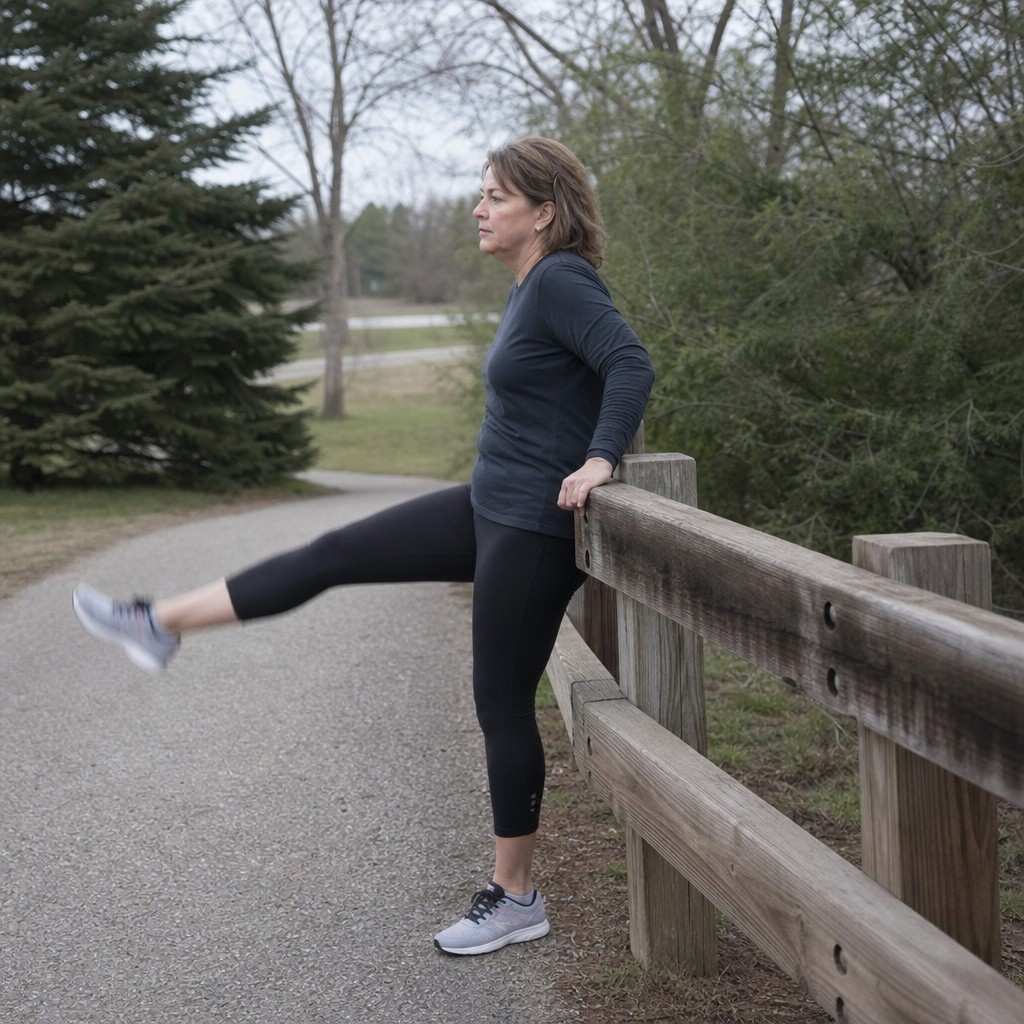
Stand next to a wall and use it for balance. Swing one leg forward and back in a controlled arc, letting the hip open through its full comfortable range.
Ten to fifteen swings per leg, front to back.
Then shift to side-to-side swings: same wall, same leg, swinging across and out.
Hip flexors loosen up fast with this one. For returning runners, tight hip flexors are a hidden contributor to short strides and lower-back ache. Thirty seconds per direction per leg addresses it before the run, not after.
Heel-to-toe raises
Your calves and shins carry every step. Wake them up before you go.
Stand with feet flat, rise onto your toes, lower slowly, then rock back onto your heels with toes lifted. Alternate smoothly, ten to fifteen reps.
Hold a wall if your balance needs support. This is not a test.
The first mile of a comeback run should not be the warm-up. That is what the five minutes before it are for.
The motion targets both calves and the shin muscles that decelerate each foot strike. Both sides of the lower leg, one simple drill. It also wakes up the ankles, which tend to be stiff first thing, especially if you have been sitting most of the day.
Single-leg balance dips
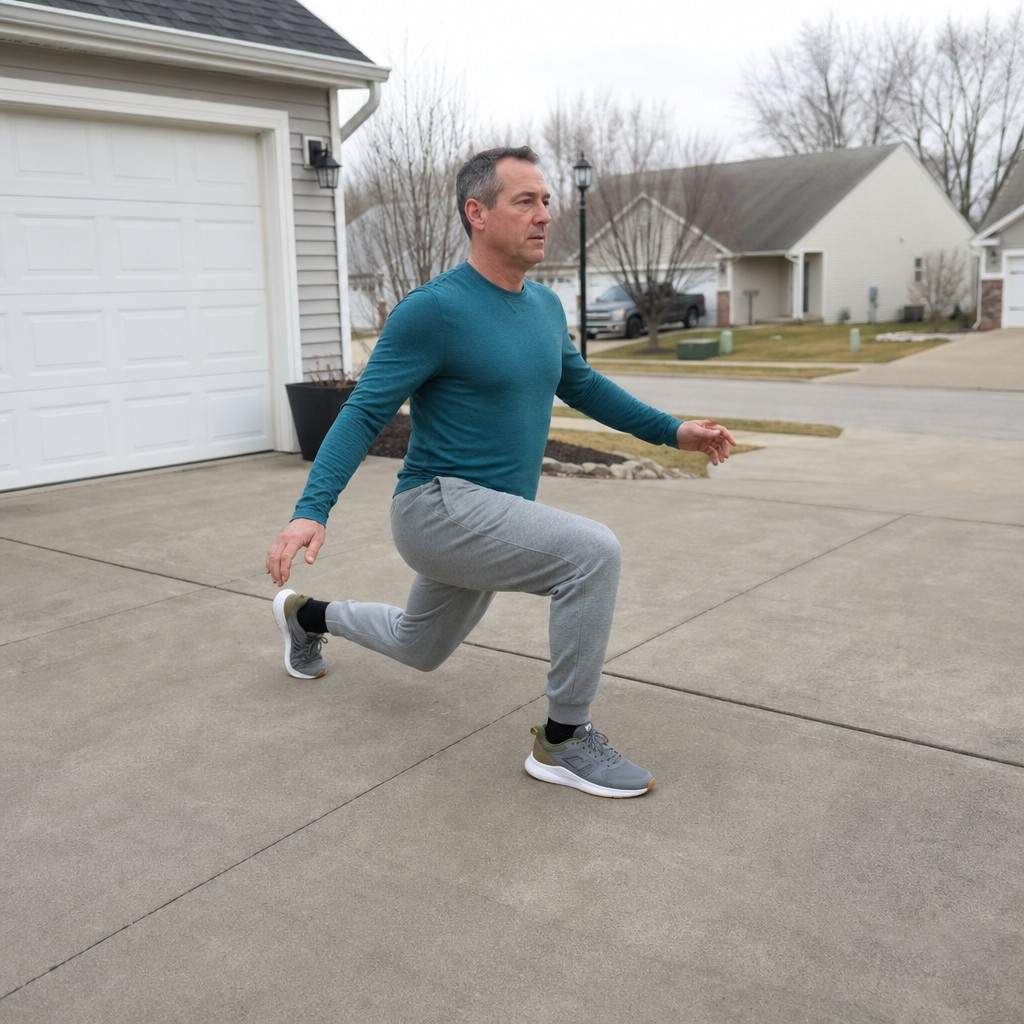
Stand on one leg, then dip slightly by bending the knee a few inches. Come back up. Repeat ten times, then switch.
This looks minimal. It is not.
The move activates your quads and the stabilizers around the knee before they face the real thing. For anyone returning to running after years off, the knee is often the first place to complain, and quad activation before load is a direct way to reduce that risk.
Keep the knee tracking over the second toe, not caving in.
Slow and controlled beats fast and wobbly here.
Hip circles
Feet shoulder-width apart, hands on hips. Draw a slow circle with your pelvis, five rotations one direction, five the other.
This is the least glamorous move in the warm-up and one of the most useful for the 40-plus returner. The hip joint sits inside a network of muscles that all tighten up with age and sedentary time. Circles move through the full range without loading anything.
Follow with a few slow bodyweight squats, going only as deep as is comfortable. No weights, no depth pressure. The goal is movement and blood flow, nothing more.
A solid base in strength exercises for returning runners will make each of these activation moves feel more natural over time.
Ankle circles
Lift one foot slightly off the ground and draw slow circles with the ankle. Ten clockwise, ten counterclockwise, then switch.
Simple, but ankle flexibility is one of the most overlooked factors in clean running mechanics. Stiff ankles shift load upward into the calves and knees.
After the circles, do a few ankle pumps: flex the foot up toward your shin, then point it down. This also helps circulate blood through the lower leg before your first step.
Putting it together
Run through these in sequence. The whole thing takes five minutes.
- Leg swings: 30 seconds per direction per leg
- Heel-to-toe raises: 15 reps, slow
- Single-leg dips: 10 reps per side
- Hip circles and shallow squats: 10 circles each direction, 8 to 10 squats
- Ankle circles: 10 each direction per foot
You will notice the difference in the first few minutes of your walk or run. The first mile does not have to feel like warming up because you already did.
For the comeback runner, this pairs directly with building your endurance the patient way. A warm-up does not replace a sensible pace and a reasonable weekly load, but it makes both of those things work better.
Cold starts are where early comeback injuries happen. This is the simplest fix.
This is general information, not medical advice. If something hurts during these movements, or you are returning after an injury or health condition, check with your doctor before proceeding.