
Most comeback attempts stall at the goal-setting stage, before a single workout happens.
Not because the person lacks motivation. Because the goal was built for someone else: a younger version, a current athlete, or a highlight-reel idea of what fitness looks like.
The goal you set on day one shapes everything that follows.
Why outcome goals backfire on a comeback

Outcome goals feel motivating when you write them down. Lose 20 pounds. Run a 10-minute mile again. Drop two pants sizes by fall.
The problem is that none of those are fully in your control.
Progress on a comeback is non-linear. Your body is rebuilding, and some weeks it cooperates less than others. When the scale or the pace doesn’t land where you expected, an outcome goal turns into a source of frustration instead of fuel.
A goal you can fail through no fault of your own is a goal waiting to undermine you.
Process goals give you something to win every week
A process goal is about what you do, not what results from it. Three easy runs this week. Fifteen minutes of stretching on rest days. A walk on lunch break, three times.
You either did it or you didn’t. There is no waiting on the scale.
This matters especially on a comeback, because the early weeks are mostly about rebuilding the habit, not the body. The fitness follows the consistency. And consistency is something you can directly control.
Per the American College of Sports Medicine, behavior-based goal setting, focusing on what you do rather than what you weigh, is consistently associated with better long-term adherence than outcome-only goals.
Meet your body where it is now
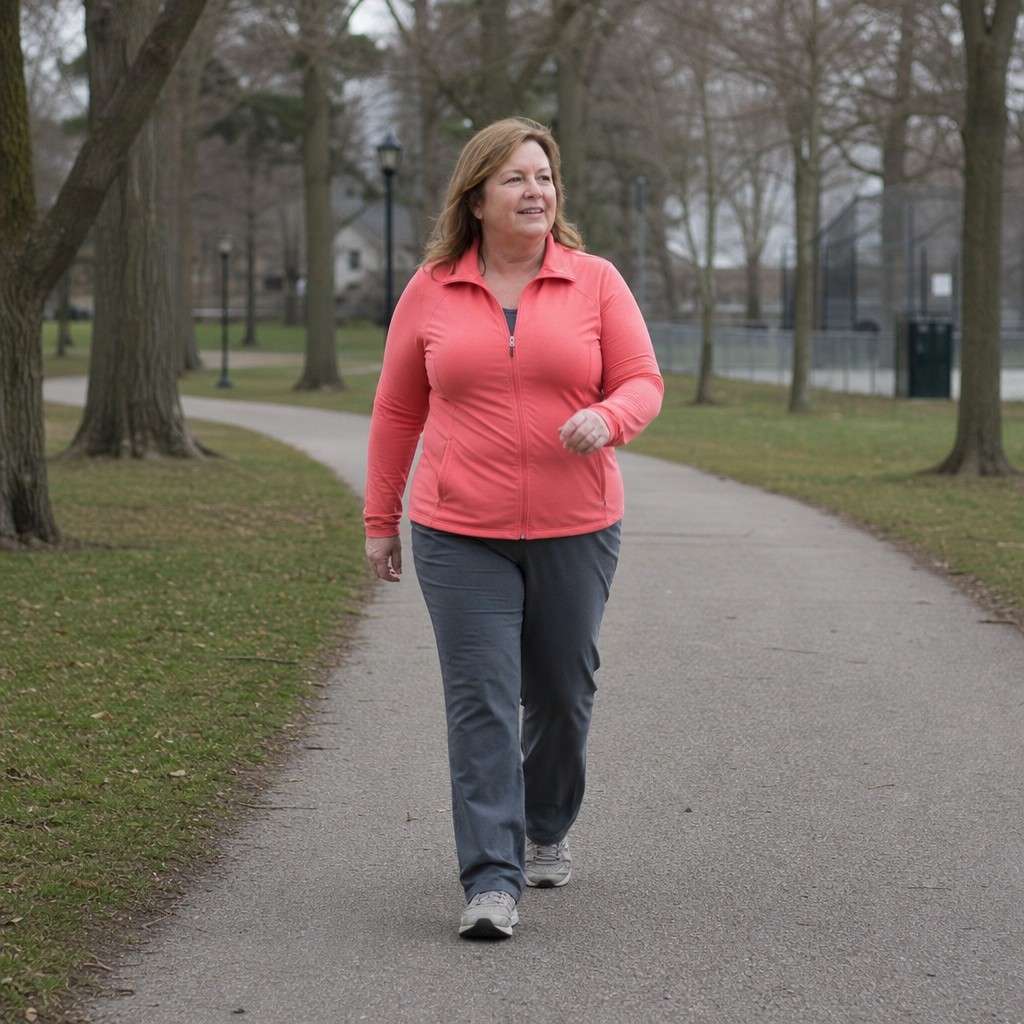
The most common mistake returning exercisers make is treating their past fitness as the baseline.
It isn’t.
If you ran regularly at 30 and you’re starting again at 48, you are not picking up where you left off. You are starting from where you actually are, with a body that has been off the clock for years, and that body deserves a different ramp than the one that worked two decades ago.
That is not a pessimistic statement. It is the only honest one.
Running injury research points consistently at sudden jumps in training volume as the main risk, not age, not being out of shape. The body adapts; it just needs the ramp to match its current state, not its memory.
Start from your real starting point. Three twenty-minute walks a week is a legitimate starting point. Two short run-walk sessions is a legitimate starting point. The goal is getting the habit going, not impressing anyone with the opening week.
Small wins build the base you actually want
There is a version of goal setting that is all or nothing: if you don’t hit the full target, you failed. That version breaks comebacks.
A better frame is accumulation. You are stacking small wins, week over week, and those wins are what eventually add up to something you can feel.
A useful structure for early comeback goals:
- This week: move three times, easy, any mode
- This month: string four consistent weeks together without missing more than one session
- Three months from now: review what you’ve actually built, then set a bigger target
The three-month target should emerge from what you’ve done, not from what you hoped you’d be doing. That’s when you have real data.
If you want a sense of what comes after the base is built, it helps to think about what kind of first event actually fits your fitness level before you sign up for anything with a race number.
Adjust without calling it failure
A goal set in week one should not be treated as a law.
Life changes. Bodies have opinion. A sore knee, a busy month at work, a bad night of sleep that runs into a week of bad nights: these are not moral failures. They are reasons to adjust the goal, not abandon it.
The goal is a living thing. Look at it every few weeks with honest eyes.
If you are consistently hitting the target without strain, add a little. If you are struggling to hit it even on good weeks, pull it back. Neither adjustment is giving up.
The process of rebuilding endurance follows the same logic: you nudge up gradually and hold there, rather than making dramatic leaps and suffering for them.
This is general information, not medical advice. If you are returning after a long break or managing a health condition, check with your doctor before ramping up.
What a realistic comeback goal actually looks like
Not a transformation. Not a return to your best shape in three months.
A realistic comeback goal looks like this: by the end of next month, you are moving consistently three times a week and you feel better than when you started.
That is enough. That is the whole job for now.
Build that, and the bigger goals stop feeling like wishful thinking and start feeling like the next reasonable step.