Most returning adults do not think much about shoes until something hurts.
A sore heel after three weeks back. A knee that complains on longer walks. Fatigue that sits in the feet rather than the legs. Often the shoe is the quiet culprit, not the effort.
Fit and feel matter more than the label on the side.
Why a dedicated shoe makes a difference
A walking shoe and a general sneaker look similar from a few feet away. They feel different after a mile.
Walking sends your foot through a heel-to-toe roll on every step. A shoe built for that motion supports the heel, flexes at the right point in the forefoot, and cushions without being so soft that the foot works overtime to stabilize. Most everyday sneakers are built for none of those things.
Running shoes are a different case. They share some features with walking shoes, but many are designed to absorb the high-impact landing of a run, not the rolling stride of a walk. The construction differs. For dedicated walking, a shoe made for walking fits better.
A shoe that was right for running in your thirties may not be the best fit for long walks in your forties.
Get fitted at a running store
This is the step most people skip. It is also the one that matters most.
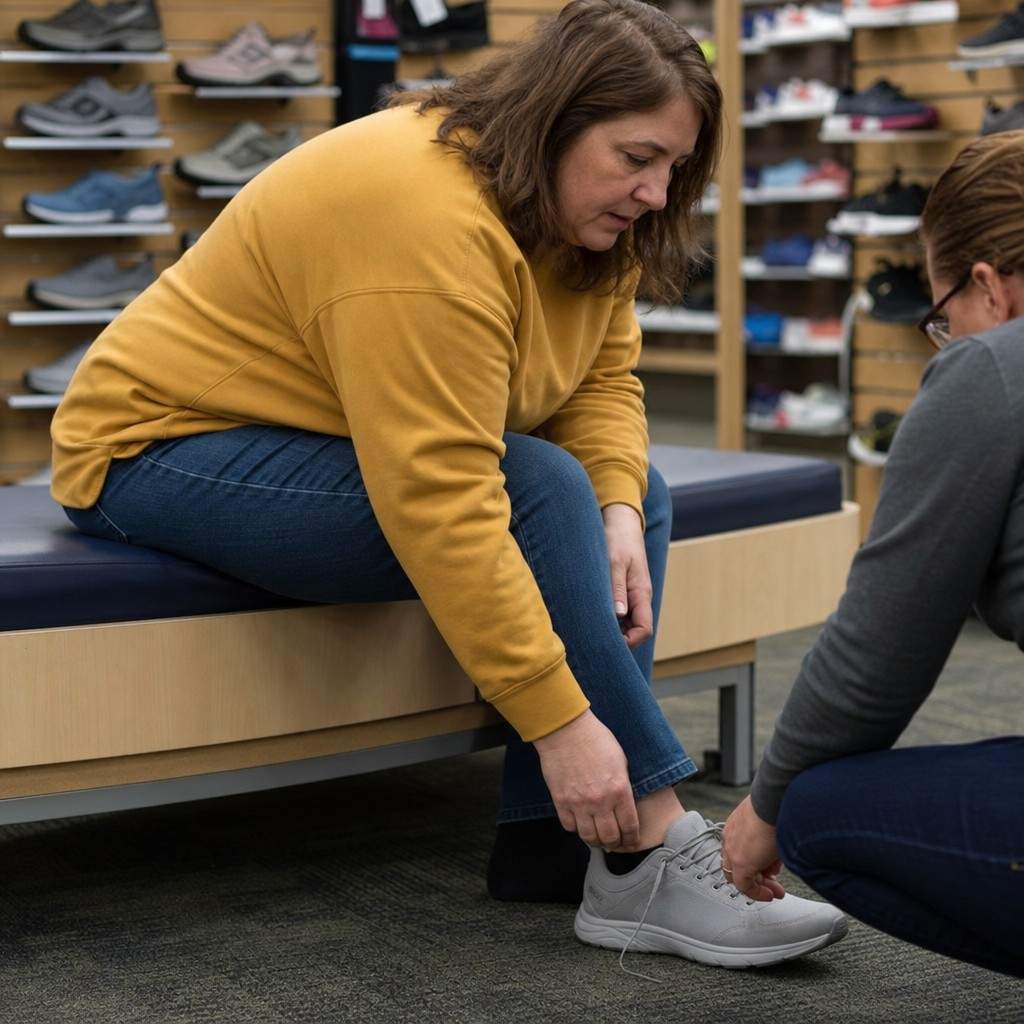
A running store staff member will watch you walk, assess your gait, and match the shoe to how your foot actually moves. That is not something a size chart does. It is not something a filtered search does either.
The process is free and takes twenty minutes. You walk out knowing which category of shoe fits your foot, not just which size.
A few things a good fit check will reveal:
- Whether your foot pronates inward, supinates outward, or moves fairly neutrally
- Whether you need a wider toe box (feet spread under load, and many people need more room than they expect)
- Whether extra arch support helps or actually adds discomfort for your foot type
If you have been away from regular exercise for a while, your foot mechanics may have shifted since you last bought athletic shoes. Old assumptions about your size or support needs are worth revisiting.
Your foot from five years ago is not exactly your foot today.
What to feel for when you try them on
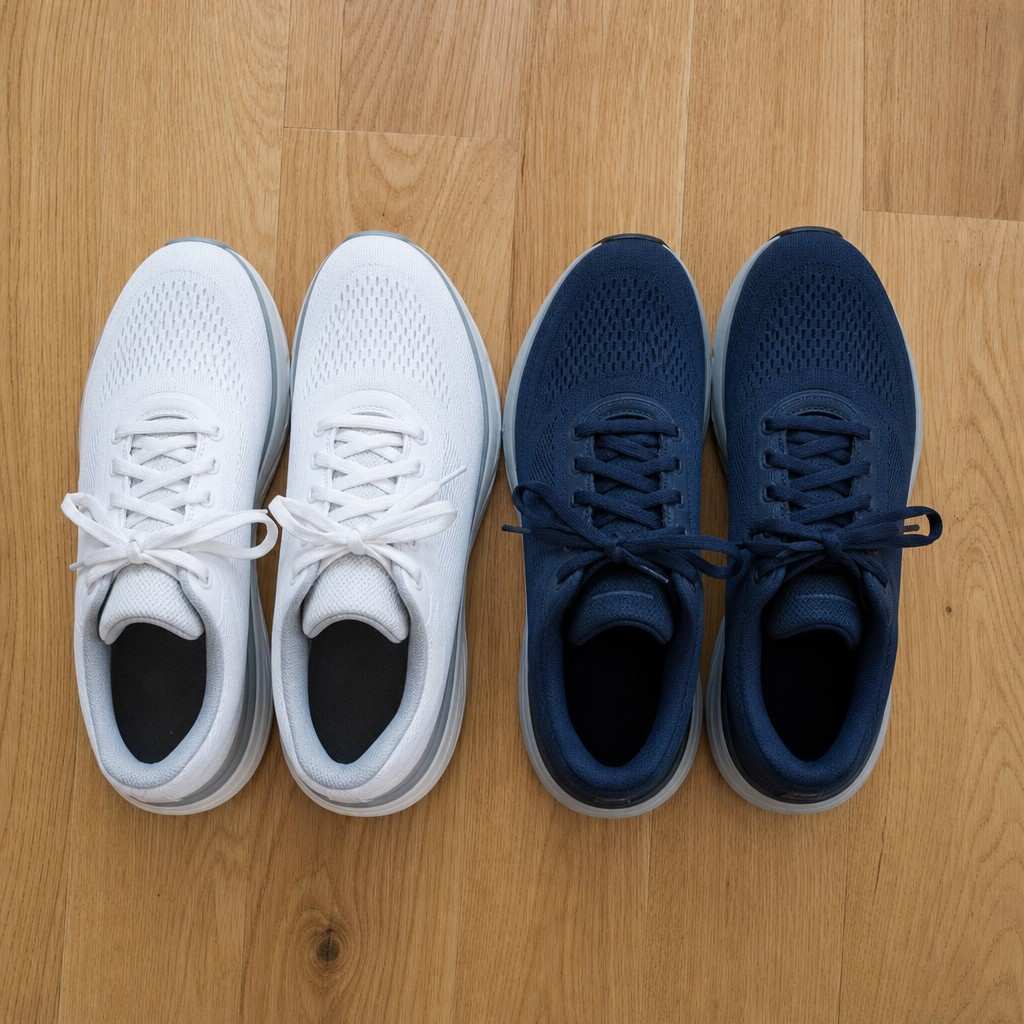
Fit is the primary screen. Every other feature comes second.
The heel should sit snugly without slipping. The widest part of the shoe should align with the widest part of your foot. Toes need room to splay, which means at least a thumb’s width between the longest toe and the front of the shoe.
Walk around the store for a few minutes. Do not stand still and judge. A shoe that pinches on a standing try-on will pinch worse after twenty minutes in motion.
Bring the socks you actually walk in. Thin dress socks and thick cushioned socks create meaningfully different fits.
If it does not feel right in the store, it will not feel right on the road.
The shoe should flex easily at the ball of the foot. Press the forefoot and feel whether it bends where your foot bends. A shoe that resists that movement will work against your stride rather than with it.
Match the shoe to where you walk
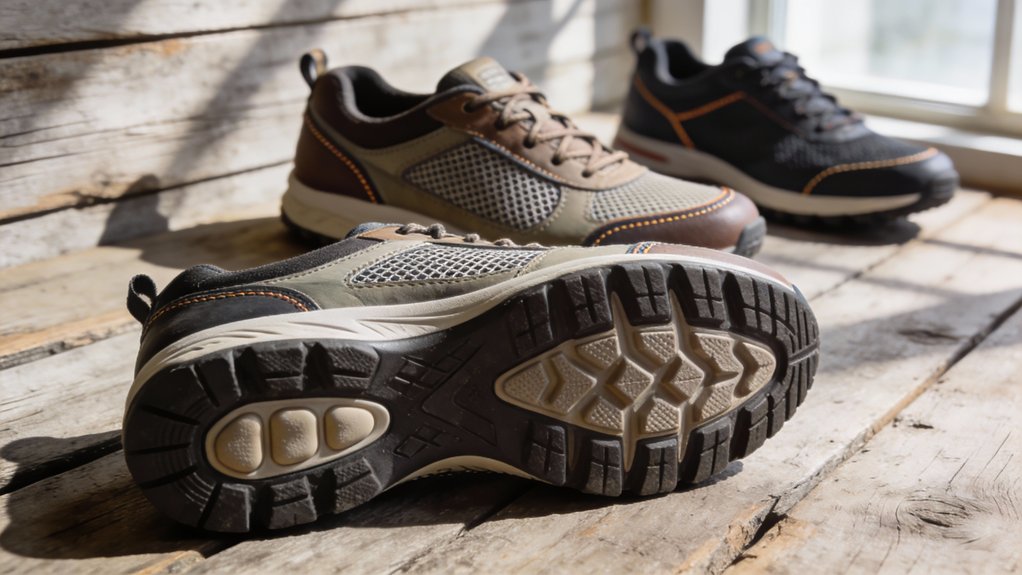
Pavement and a groomed park path call for a different outsole than light trail walking. Most returning adults do the bulk of their walking on flat, paved surfaces, which means a standard walking or road-running shoe is appropriate.
If your routes include gravel, uneven surfaces, or soft ground, a trail-oriented sole adds grip without much downside. The tread pattern is more aggressive, which gives more bite on loose ground but is not necessary for roads.
Starting with what fits your most common surface keeps the choice simple. You can always add a trail pair later if the terrain changes.
Cushioning and drop: the basics
Two specs come up often in shoe discussions. Neither requires specialist knowledge.
Cushioning refers to how much material sits between your foot and the ground. More cushioning absorbs impact, which matters on hard surfaces and during longer walks. Less cushioning gives more ground feel, which some people prefer. There is no universally correct answer. Both the store staff and your own testing will point you toward what works.
Heel drop is the height difference between the heel and forefoot of the shoe. A higher drop tips the body slightly forward, which some people find comfortable for walking. A lower drop promotes a more level foot position. Most walking shoes sit somewhere in a moderate middle range. Unless you have a specific need or injury history, drop is secondary to fit and cushioning feel.
Neither number means much without trying the shoe.
Replace them before they let you down
Walking shoes wear out from the inside before they look worn on the outside. The midsole compresses over time, and the cushioning that was absorbing load quietly stops doing its job.
A rough guide for returning walkers: plan to replace shoes somewhere around 300 to 500 miles. If you are walking three or four days a week for 30 to 45 minutes, that lands roughly every 8 to 12 months depending on pace and surface.
The signs that a shoe has done its work:
- The heel counter feels soft or collapsed under thumb pressure
- The outsole shows significant wear in one spot
- Familiar fatigue starts appearing earlier in a walk than it used to
- Foot or joint discomfort arrives without an obvious cause
Do not wait for visible wear. The cushioning goes first.
A worn-out shoe is one of the most common and most overlooked causes of early-comeback soreness. Replacing on schedule is one of the easier ways to stay consistent.
Keep the gear thinking in proportion
Good shoes matter. They do not need to be expensive, rare, or meticulously researched. The goal is a pair that fits your foot, suits your surface, and gets replaced when the cushioning goes.
If you want to compare options before visiting a store, browsing walking shoes for beginners on Amazon can give you a sense of the category and price range, though fit-testing in person remains the more reliable step.
A well-fitted shoe is the base. The comeback that starts with walking and builds toward a mixed week of movement takes care of the rest.
Get fitted. Trust what feels right. Replace on time.